Turkish University Signs MoU with ICCBS
KARACHI: Konya Technical University (KTUN), Konya, Turkey, has signed a Memorandum of Understanding (MoU) with the International Center for Chemical and Biological Sciences (ICCBS), University of Karachi, to promote joint educational, teaching, research, and cultural activities between the two institutions.
The agreement was formally signed during a ceremony held at the 5th Pak–Turk International Conference on Chemical Sciences (PTICCS-2025), recently hosted by ICCBS, University of Karachi.
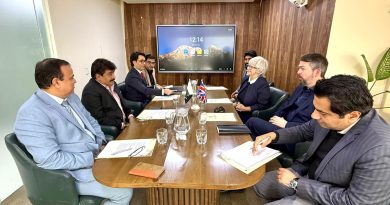
The MoU was signed by Prof. Dr. Muhammad Raza Shah, Director ICCBS, and Prof. Dr. Huseyin Deveci, Vice-Rector of Konya Technical University, on behalf of their respective institutions. The ceremony was attended by a large number of Turkish and Pakistani scholars and officials.
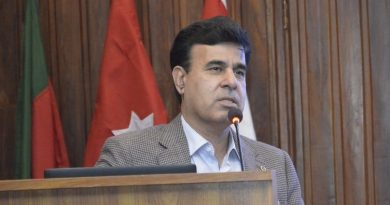
Speaking on the occasion, Prof. Dr. Muhammad Raza Shah described the agreement as a milestone in promoting collaborative educational, teaching, research, and cultural activities. He emphasized that Pakistan and Turkey share deep-rooted historical and cultural ties, which should be further strengthened, particularly in the fields of education, science, and technology.
He further highlighted that ICCBS is among Pakistan’s leading centers of excellence in chemical, biological, and biochemical sciences and serves as an international hub for training scholars from various countries.
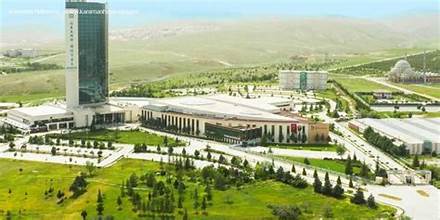
Konya Technical University is a leading public institution of higher education in Turkey. Its mission is to develop entrepreneurial and competent individuals committed to ethical values, lead the production of knowledge, design, and technology, and contribute knowledge and expertise for the benefit of society at regional, national, and global levels.
The scope of collaboration under the MoU includes joint and dual degree programs at the master’s and PhD levels; short and long-term mobility of faculty members, students, and staff; professional development and staff training; sharing and development of educational materials and resources; co-supervision of master’s and doctoral students and their internships; exchange of academic experience and information; organization of joint academic activities such as seminars, conferences, symposiums, and roundtables; and execution of joint research projects.