Repeated Safety Concerns as Major Fire Erupts in Landhi EPZ
By Our Correspondent
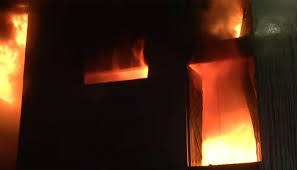
KARACHI: A major fire erupted late Friday night at a plastic manufacturing factory in Karachi’s Landhi Export Processing Zone (EPZ), rapidly spreading to a nearby warehouse and another factory. Firefighters battled the blaze for nearly 11 hours before bringing it under control. No casualties were reported, but officials said the incident caused heavy financial losses as large quantities of plastic, fiber, shoes and other stored goods were destroyed.
Multiple fire tenders, snorkels and water bowsers were deployed as flames intensified due to highly combustible materials stored inside the affected units. Authorities said the scale and duration of the operation reflected both the intensity of the fire and the challenges in accessing the site quickly.
Landhi EPZ is one of Pakistan’s key export manufacturing hubs, housing dozens of industrial units linked to international supply chains. The latest incident has again highlighted concerns over fire safety enforcement and emergency preparedness in the zone. A former chairman of the Export Processing Zone Authority (EPZA) said recurring fires point to weak implementation of safety rules and inspection mechanisms.
Since 2020, the EPZ has witnessed several high-intensity fires that damaged factories, disrupted production and injured workers. In June 2025, a third-degree fire spread across at least four factories, including cosmetics units, burning for more than half a day and injuring five people, including firefighters, after a partial building collapse. In August 2025, a blaze destroyed a five-storey garments and used-clothing factory and affected three adjacent units, leaving eight workers injured. Another large fire in December 2025 gutted a used-clothing facility and caused extensive inventory losses.
Preliminary assessments of past incidents have frequently cited electrical faults, overloaded wiring and outdated infrastructure as likely ignition sources. Safety experts also point to poor internal fire protection systems — including non-functional alarms, lack of sprinklers and missing hydrants — along with weak building compartmentalisation that allows flames to spread between adjoining units.
Industry analysts warn that factories dealing in textiles, plastics, packaging and used clothing remain particularly vulnerable due to the volume of flammable materials stored on-site. They say delayed detection, limited first-response capacity and inconsistent regulatory oversight continue to raise risk levels.
Observers have called for stricter enforcement of fire safety codes, mandatory suppression systems, regular third-party inspections and improved emergency access planning to prevent future large-scale industrial losses in the EPZ.