‘Millions Trapped in Poverty Despite GSP Plus Gains’
KARACHI: Renowned economist Kaiser Bengali has called for immediate land reforms and a quarterly revision of the minimum wage, warning that Pakistan’s existing wage structure has pushed millions of workers into poverty despite increased business activity following the restoration of GSP Plus status.
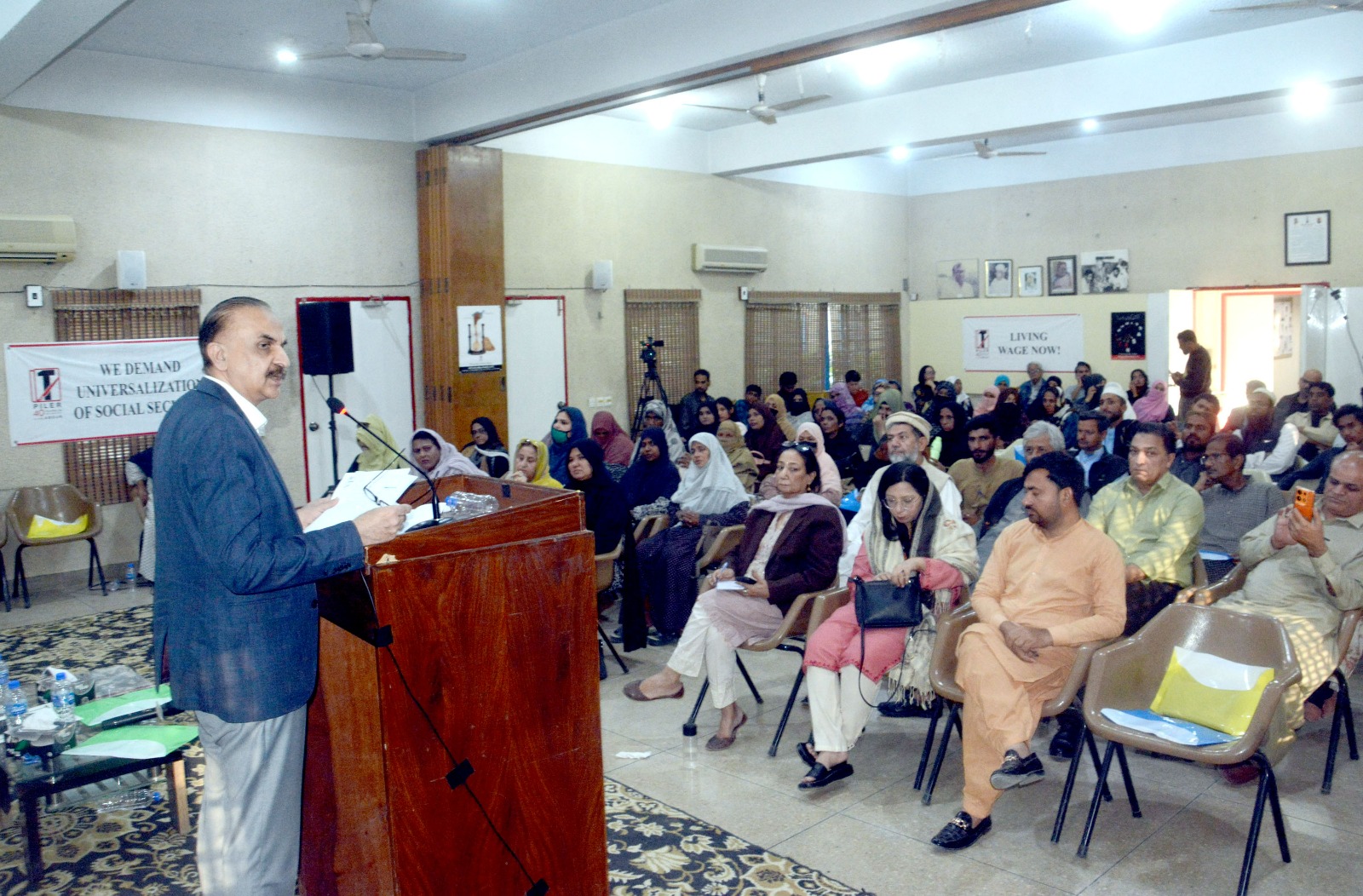
Speaking at a conference on the implementation of minimum wage organized by the Pakistan Institute of Labour Education and Research (Piler), Bengali said that poverty persists because workers lack productive assets. “People are poor because they don’t have assets. Even one acre of land can significantly improve the lives of the rural population in Sindh,” he said, noting that Sindh has the highest proportion of landless farmers at 69 percent, compared to 55 percent in Punjab. He added that the poorest 10 percent of households spend nearly half of their income on food alone.
Presenting data on wage disparities, Bengali highlighted significant gender and regional gaps. In rural areas, male workers earn an average of Rs30,000 per month compared to Rs28,000 for women, while in urban areas men earn Rs37,250 against women’s Rs35,000. He also pointed to disparities in education and technical training, noting that Punjab leads in youth education and skills development, while Sindh lags far behind.
Opening the conference, Piler Director Abbas Haider said that although exports and business activity have increased after Pakistan regained GSP Plus status, workers’ wages have remained stagnant. He said workers are often forced to work overtime, with women workers facing even harsher conditions. Haider stressed that the absence of formal employment contracts deprives workers of their legal rights and called for mandatory written contracts.
Veteran journalist Husain Naqi echoed the demand for quarterly wage revisions, arguing that inflation rapidly erodes workers’ incomes and that the struggle for fair wages must extend to both urban and rural areas.
National Trade Union Federation General Secretary Nasir Mansoor revealed that wage theft amounts to Rs1.2 to Rs1.5 billion every month. He said only 400,000 workers are registered with the Sindh Employees’ Social Security Institution (Sessi), allowing employers to evade contributions for unregistered workers. He described factories as “modern slavery,” where working hours are strictly monitored but exit times remain undefined.
International speakers also addressed the gathering. Anna Bryher of Labour Behind the Label said audits have failed to curb wage theft, harassment, and forced overtime, while Abida Ali of the Workers Rights Consortium noted that despite the textile industry being worth $1.85 trillion globally, nearly 80 percent of workers do not receive minimum wage. Qazi Khizer, HRCP Sindh vice-chairperson, recommended minimum wage be set at Rs75,000. Dr Riaz Shaikh, Piler’s board chairman, said the rich-poor divide has widened dramatically.
Sindh Labour Secretary Sajid Jamal Abro assured participants that the government would take steps to improve the system. The conference also paid tribute to Piler’s founding director, Karamat Ali, whose contributions to the labour movement were remembered by speakers.