Karachi Labourers Face Up to 20 Hours of Daily Power Cuts, Study Finds
By Our Correspondent
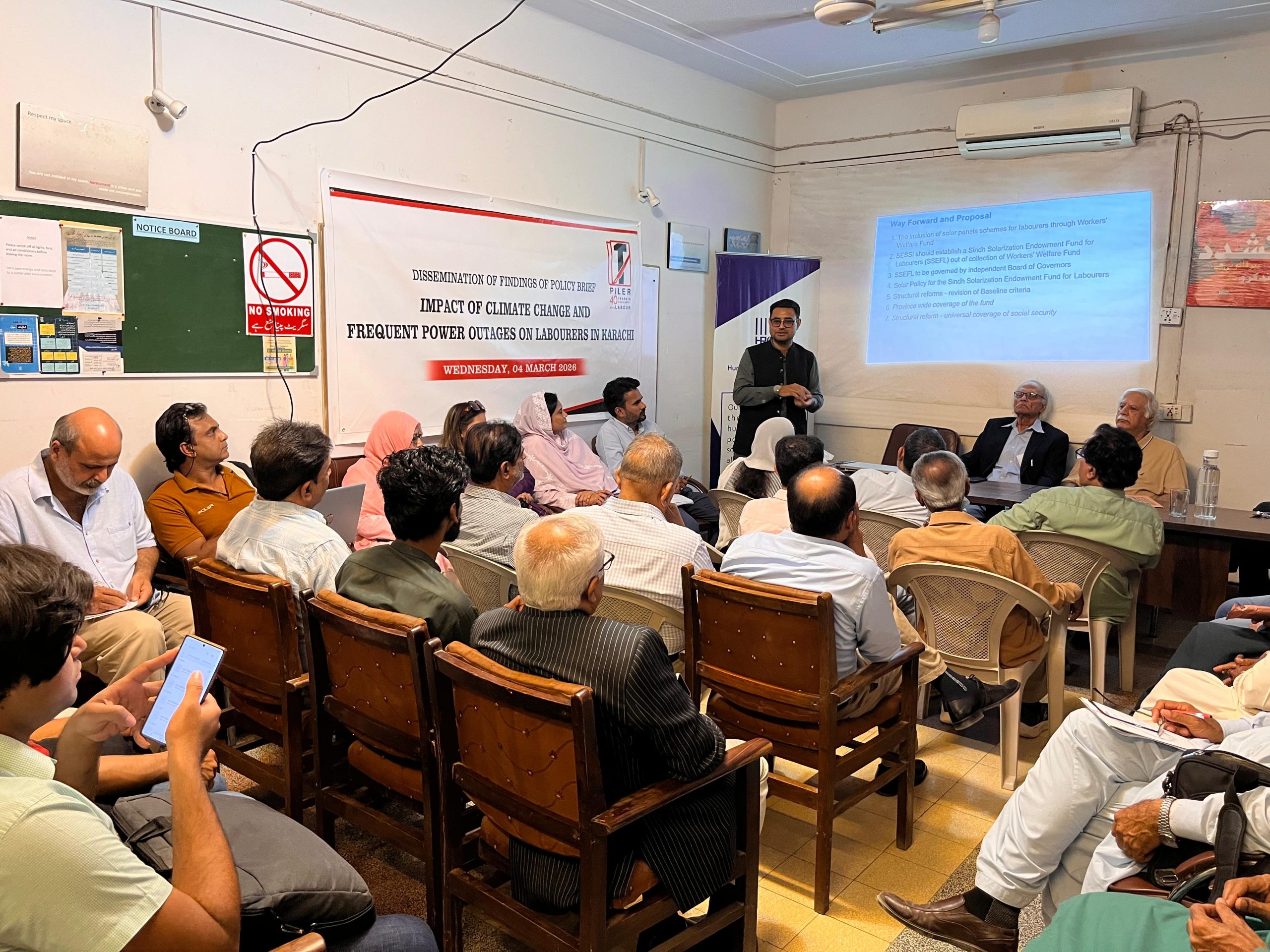
Karachi: Nearly a third of workers in Karachi’s industrial neighbourhoods endure between 18 and 20 hours of daily power outages, with some areas facing blackouts exceeding 20 hours, according to a policy brief launched Wednesday by the Pakistan Institute of Labour Education and Research (PILER) at the Human Rights Commission of Pakistan office.
The study, based on surveys and focus group discussions in Baldia, Korangi, Landhi, Ibrahim Hyderi and Orangi, depicts a labour force caught between an intensifying climate crisis and a failing energy system.
PILER Director Abbas Haider said the findings reveal longstanding policy failures. “For too long, the cost of Karachi’s energy crisis has been borne by its poorest workers,” he said, adding that feeders serving labour settlements often face the heaviest load shedding, leaving workers sleep-deprived and affecting their health and incomes.
The study found that 59 percent of surveyed households earn below the legal minimum wage of Rs40,000 per month — itself far below the estimated living wage of Rs103,772. Thirteen percent of respondents were unemployed. With most of Karachi’s roughly 10,000 factories relying on informal or piece-rate labour, the majority of workers lack social security, medical coverage and pensions.
Researcher Asim Bashir Khan said prolonged outages trigger cascading social harms. “Workers arrive at factories already exhausted after sleepless nights,” he said. Without electricity, homes lack fans and water pumps, children struggle to study, and risks of mosquito-borne diseases, workplace accidents and domestic violence increase.
The report estimates that about 80 percent of Sindh’s workers fall outside the social security system run by the Sindh Employees Social Security Institution, largely because informal and piece-rate workers are excluded. More than 90 percent of labour contractors are also not registered with the Sindh Revenue Board.
PILER proposes creating a Sindh Solarization Endowment Fund for labourers by allocating part of the Rs78.88bn collected through workers’ welfare and profit-participation funds between 2016-17 and 2024-25. The fund could finance off-grid solar systems for more than 94,000 labour households, helping reduce electricity costs and improve resilience to climate impacts.