High Coverage, Hard Reality: Why Polio Still Lingers in Karachi
By Our Correspondent
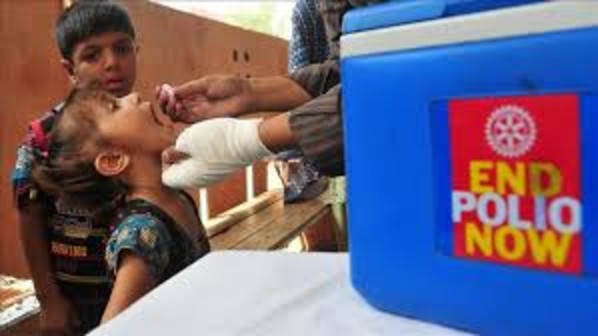
KARACHI: The Karachi administration says that 80 percent of the city’s targeted children have been vaccinated within the first three days of the ongoing anti-polio campaign — a strong operational claim that highlights campaign momentum but also revives a long-standing concern: similar high-coverage figures are reported after most drives, yet Pakistan remains one of only two countries in the world, along with Afghanistan, where polio transmission continues, while the disease has been eliminated elsewhere.
The campaign, launched on February 2, targets about 2.1 million children across Karachi. According to official data, more than 1.13 million children have so far received polio drops. Commissioner Karachi Syed Hassan Naqvi reviewed progress on the fourth day through a video-link meeting with deputy commissioners, assistant commissioners, EOC officials and district health officers, and also visited District Malir, including a drainage sampling site and a Basic Health Unit in Rehri Goth. He directed field officers to meet targets and ensure strict implementation of micro-plans.
Karachi’s unique demographic profile makes eradication efforts more complex. As a large, multicultural and highly mobile megacity, it hosts populations from across Pakistan, including Pashto-speaking communities from Khyber Pakhtunkhwa, as well as Afghan migrants and refugees, alongside Sindhi, Urdu-speaking, Baloch and other groups. Health officials say that while most families cooperate, vaccine hesitancy and refusals persist in some pockets due to misinformation, mistrust, frequent campaign fatigue, and misconceptions about vaccine safety. Mobility and undocumented settlements also make repeated follow-up difficult.
Environmental surveillance data continues to show mixed signals. Of 12 sewage samples collected across Karachi in January, several tested positive for poliovirus, including samples from Keamari, Central and South districts, while a few locations in East and West districts returned negative results. Samples from Malir and Korangi are still under analysis. Public health experts consider environmental detection a key indicator because it reveals silent virus circulation even when case numbers are low.
Authorities say the district administration, Emergency Operations Center and health department are jointly monitoring the drive on a daily basis. The commissioner has stressed community engagement and the role of social mobilizers to convert refusal cases and reach missed children.
Analysts note that while campaign performance indicators show periodic improvement, eradication depends on sustained verified coverage, independent monitoring, and trust-building at the community level — not only headline vaccination percentages announced during each round.