Gul Plaza Tragedy Needs Transparent Probe
By Zahid Farooq
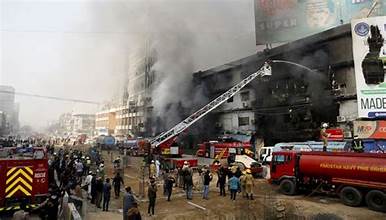
KARACH: The horrific fire that broke out at Gul Plaza, located on M.A. Jinnah Road, Karachi, at around 8:15 a.m. on January 17, 2026, quickly engulfed the entire building. Nearly 1,200 shops inside the plaza were reduced to ashes within moments. From the very first day, office-bearers of the Gul Plaza Traders’ Union had expressed fears that around 80 people might be inside the building. At that time, no one knew exactly how many customers were present. Some injured people managed to escape from the burning building, while others were burned to death and were separated from their loved ones forever.
This fire became a topic of discussion across Karachi and throughout the country. In the National Assembly and the Sindh Assembly, emotional speeches were made about the Gul Plaza fire, allegations were exchanged, and poor planning was debated. Questions were raised about coordination among institutions, emergency response, the building’s construction and approved plans, illegal structures, and the performance of rescue organizations. At the same time, the conduct of the Mayor, the Chief Minister of Sindh, and other elected representatives also came under scrutiny.
Various institutions carried out their own investigations into this tragic incident. Eventually, the Chief Minister of Sindh, Syed Murad Ali Shah, formed an investigation committee under the chairmanship of the Karachi Commissioner. The committee has been tasked with determining why the fire broke out, what role the rescue services played, what responsibilities other relevant institutions had, how such incidents can be prevented in the future, and who was responsible, so that they can be identified and similar tragedies can be avoided.
To ensure that this inquiry is clean and transparent, and to build public trust in its findings, it is essential that the investigation be conducted impartially. The views of the victims’ families must be included. Civil society and professional institutions should be invited to participate. Advertisements should be published in leading newspapers calling on citizens to come forward if they wish to share opinions, provide information, or present facts related to this tragic fire.
Government inquiries are often buried and forgotten. To make this inquiry meaningful and credible, the more public input it includes, the more trustworthy the final report will be. Representatives of municipal bodies as well as members of the provincial and national assemblies should be given the opportunity to appear and record their statements. Once the inquiry is completed, it should be made public to maintain transparency.
The facts concerning the affected shopkeepers should form a separate part of the inquiry, and any recommendations regarding the customers who were present in the plaza at the time should also be addressed separately. Measures proposed for the rehabilitation of shopkeepers should be clearly presented, and the inquiry committee should also prepare transparent recommendations regarding compensation for customers and for the families of those who lost their lives.
One part of the inquiry should focus specifically on the rehabilitation of affected shopkeepers and on the reconstruction of the plot. A memorial for those who lost their lives in this tragedy should be built next to the building at a place where it will always serve as a reminder of this disaster.